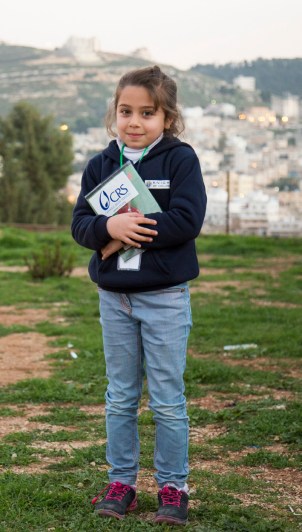
Rama attends the CRS-supported Latin School of Naour in Amman, Jordan, part of the CRS outreach to Syrian refugees. Photo by Oscar Durand/CRS
It is easy to think of people we do not know as being strangers or the “other.” I was struck by something that Abraham Maslow said. He believes that humans have an intense need to belong, to have a sense of community with one another – in Church speak we call it solidarity. Believing that at our core we are all humans in one human family. This explains our common need to be part of families and bonds created in organizations ranging from the workplace to fraternal associations to platoons. Those refugees suffering a half a world away Continue reading “CRS Syrian Refugee Update”→
Over the past few months I’ve been blogging about refugees who are fleeing war and persecution. A dear friend of mine saw a PBS news report done by Katie Couric on the refugee families that were rescued by Pope Francis. She passed the information on to me so I could post a video of Couric’s report because, “basically she reiterated everything you have been saying… All they want is to make a living, send their children to school, have peace in Syria and go home. I thought it might be worth you trying to find it just to reinforce this is not just your opinion.”
Couric interviewed two families who were taken to Italy from Lesbos by Pope Francis. In this very short video the families share with Couric their gratitude for their safety, the reasons they fled, and their efforts to integrate into Italian society. It is worth watching.
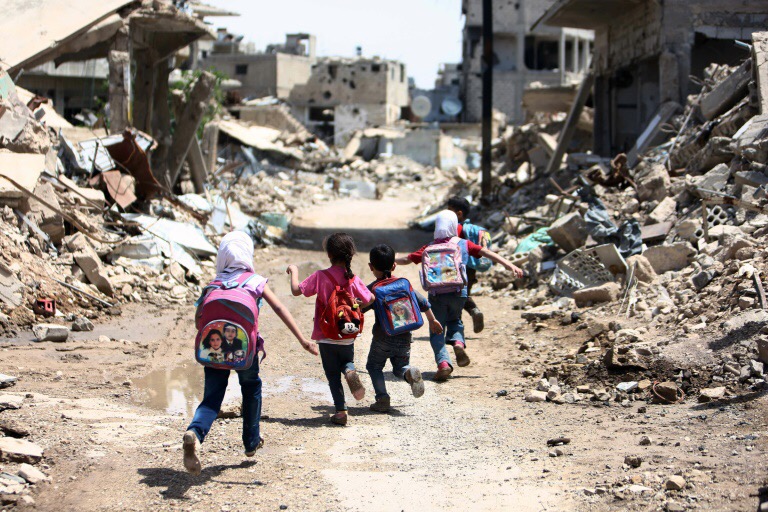
Syrian school children run past heavily damaged buildings in the rebel-held. area of Jobar, on the eastern outskirts of the capital Damascus. (Amer Almohibany, AFP/Getty Images)
To understand why refugee families had fled Syria one only needs to look at this picture. Who would stay in a town, city or country where their children have to run past the rubble of war to go to school – if schools are still even open?
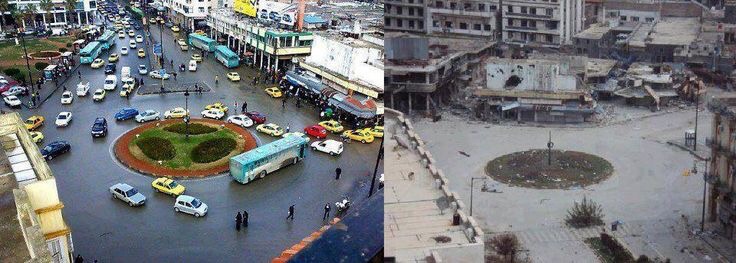
Too many people seem to think that before the civil war that Syria was a backward, impoverished country full of citizens longing to come to the west. This exhibits a remarkable ignorance of the facts. Before the war, Syria was a modern country with an affluent, well educated population. In fact, the literacy rate in Syria at 86.4% (CIA World Fact Book) was slightly higher than the U.S. at 86% (U.S. Department of Education April 2016).
Syria’s cities were modern, and growing until the war began. Now buildings, boulevards and neighborhoods have been reduced to rubble.
Despite the devastation, refugees consistently told our @CatholicRelief delegation that once peace arrives, they will return to Syria and rebuild. Until then, they have every reason to flee, save their children and hope for peace.
A Turkish gendarme carries the body of a refugee child on January 30, 2016 after the boat he was on sunk in the Aegean Sea. He was one of 40 people on the boat who drowned. (Ozan Kose/Getty Images)
They still flee, many still suffer and some die. Who should be concerned about the largest flow of refugees since World War II? We all should.
In January of this year I traveled with a @CatholicRelief Global Fellows delegation to Greece and Serbia to try to better understand the cause of the refugee crisis in Europe and the response of the Church and other international agencies. So, what did we observe and learn?
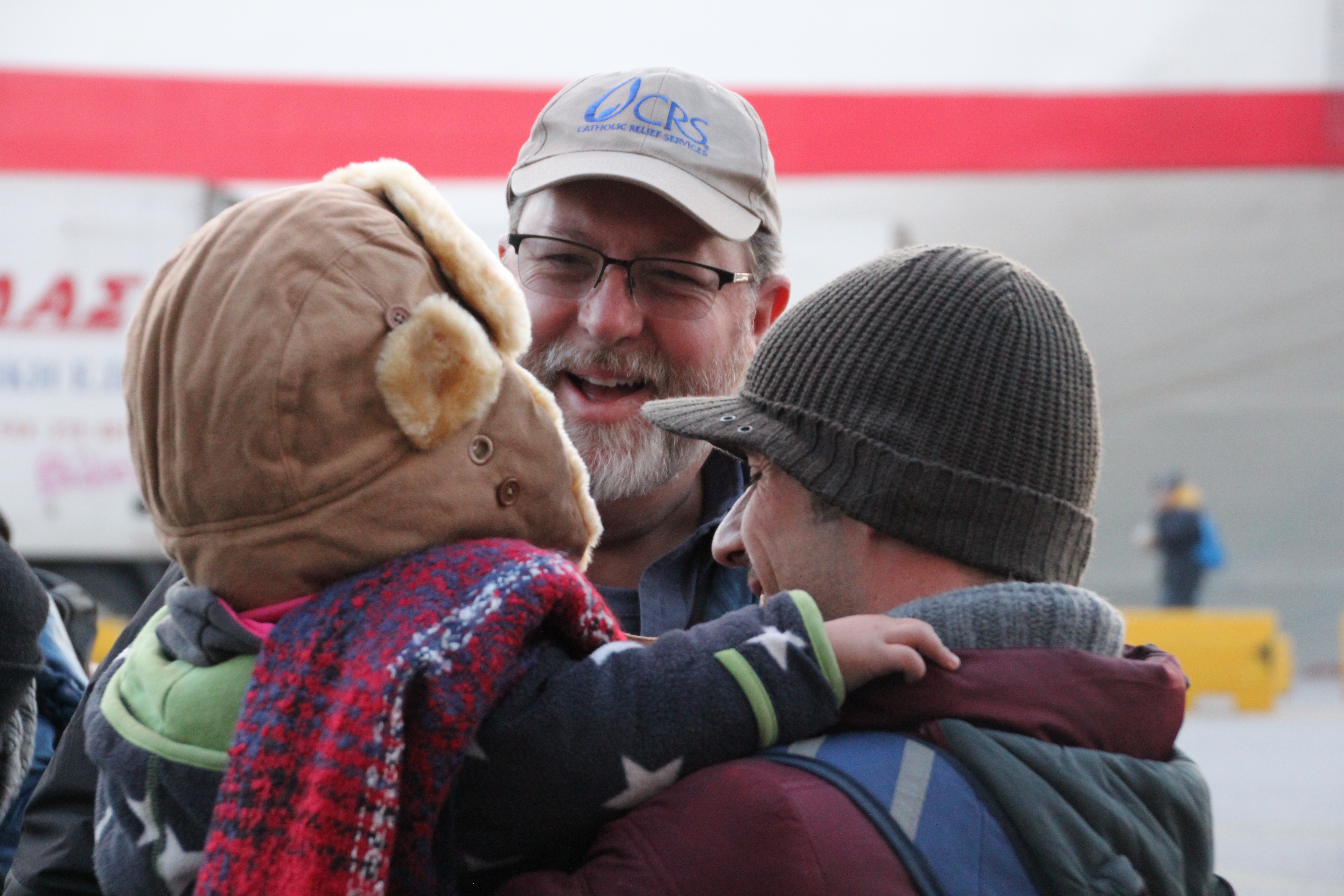
Deacon Bill Hampton of Peachtree City traveled to Europe through Catholic Relief Services Global Fellows program. He was there to help Syrian refugees as they disembarked from ferries in Athens, Greece. Photo: Mikaele Sansone/CRS
The Atlanta Journal Constitution has published an article about a number of Georgians who have witnessed the Syrian Refugee Crisis in person. This includes our @CatholicRelief trip as well as others. Read About it Here
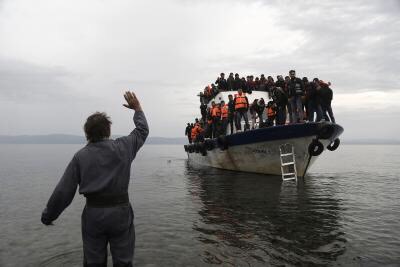
A resident waves to an overcrowded fishing boat carrying refugees to Lesbos. (CNS Photo /Yannis Kolesidis) Pope Francis is planning to visit the Greek island of Lesbos in mid-April to show the Church’s solidarity with them and to highlight this humanitarian crisis. The full story from America is here: Pope to Visit Lesbos
NPR’s Scott Simon reports a real 2016 Good Samaritan story involving Syrian refugees. Hear how this German politican responds to his rescuers…would it be different in your city, state or country?
A mother and two children at Idomeni – AP Photo/Vadim GhirdaWith many countries closing their borders, especially Macedonia the humanitarian crisis in Europe has gotten worse. Now 12,000 refugees are being detained in a camp designed for 2,500 with no prospect of leaving. A Greek Government Minister has visited the camp and declared it to be “as bad as a Nazi Concentration Camp.” The full story is here.
Deacon Don Weigel was interviewed by The Western New York Catholic magazine recently. His comments are insightful. Speaking of the extremely long process for refugees to enter the U.S., Deacon Don points out that, “If you’re a terrorist trying to get into the United States by posing to be a refugee, you’re either willing to wait for decades or you’re dumb, because it would be much easier for you to get there by student visa or work visa or tourist visa. Turning our backs on the refugees is just a denial of their humanity and their dignity.” Read the full article here.





 A Deacon's View