
Catholic Relief Services is doing a nice series called, “What is Lent.” In the series a number of Catholic clergy and laity describe what went means to them. Today’s post features Fr. James Martin SJ. These are well worth viewing. Thanks CRS.
Category: CRS
Possible Ceasefire as Aleppo Almost Surrounded
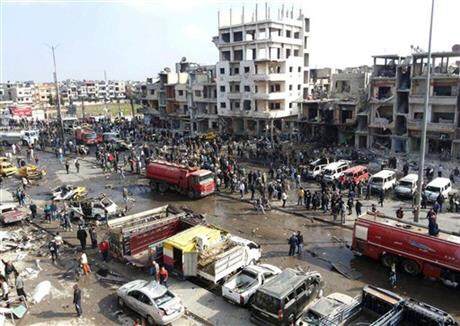
Those remaining will depend on the ceasefire so that food and other humanitarian aid can be provided. In this war, smaller towns and villages have been besieged and residents have starved. See this report for more on that: Syrians Starving.
The 50,000 (or more) Aleppo residents who have fled will join the long line of refugees that now stretches from Syria to Northern Europe. Humanitarian agencies like Catholic Relief Services, Caritas, Doctors Without Borders and others are working around the clock to help and protect our fellow human beings who are escaping war and persecution. Their resources are not unlimited. As part of your 2016 Lent and/or out of compassion for those in need consider giving to these agencies who are representing the best of Christianity and America. @CatholicRelief #RefugeeCrisis
Presentation on Rufugee Crisis
 Tomorrow Wednesday, February 17th at St. George Catholic Church in Newnan I will be giving a presentation about my recent trip to the Balkans where I met with refugees from the wars in Syria, Iraq and Afghanistan. There will be Stations of the Cross at 6:00 pm and the class will begin at 7:00 pm. Everyone is welcome!
I hope you can make some or all of these events part of your Lent this year.
St. Louis Review – Priest Moved by Meeting Refugees
The St. Louis Review has an excellent article about our Catholic Relief Services trip to the Balkans to meet with the refugees from the wars in Syria, Iraq and Afghanistan. The article is Fr. Ron Chochol’s perspective on the situation. I’ve had the great pleasure of traveling with Fr. Ron on CRS trips to Kenya (in 2014) and to the Balkans this year. I trust you will find his observations very worthwhile.
St. Louis Review – Priest Moved by Meeting Refugees
The #RefugeeCrisis will last a long time.
CRS Media Center Information – Updates for American Catholics

Catholic Relief Services has a Media Center that contains information about a wide range of CRS humanitarian efforts taking place around the world. The work done by CRS is done in the name of the American Catholic Church, so all American Catholics should have an interest in this work. Today there are posts related to the Pope’s visit to Central America, work in the Central African Republic, and our Global Fellows trip to the Balkans. You can access the CRS Media Center at the following link: CRS Media Center
#CatholicRelief is on the ground, providing humanitarian aid during this #RefugeeCrisis
Syria…Maybe Some Real Hope!

Spending time with the refugees, CRS and Caritas workers in Greece and Serbia will affect ones heart and strengthen feelings of compassion and mercy for the refugees and aid workers. There may be some good news for them and good news for the world. The announcement that, “Diplomats meeting in Munich agreed early Friday to implement a ‘cessation of hostilities’ in Syria’s long-running civil war and bring aid into the country to stem a humanitarian crisis that has displaced millions,” is a ray of hope for millions that have fled and desire to return home. Perhaps soon humanitarian organizations like Caritas and CRS can begin to help those trapped in Syria by the war in addition to those who have fled.
The full story is here: US-Russia Agree to Cease Fire in Syria.
Let’s pray it is for real and goes into effect.
Schengen, why Americans should care about refugees, part 3.

Over the past week I have tried to explain why all Americans should be concerned about the refugee crisis in Europe. After returning from the Catholic Relief Services trip to the Balkans, I have been blogging and meeting with many people about this important issue. In short, we should provide aid and revise our thinking and policies for three reasons.
First, assisting people who are fleeing war and/or persecution is just the right and Christian thing to do. Second, admitting that our country bears some responsibility for destabilizing the Middle East prompts us to assist our friends and allies who bearing the brunt of the unintended consequences. Yet, there are people that I know who reject these two rationales for providing aid and assistance to the refugees. For them, I would suggest another, quite self serving reason for giving direct and indirect aid to the refugees. That reason can be summed up in one word, Schengen. This word is quite important so I hope you will read on. Continue reading “Schengen, why Americans should care about refugees, part 3.”
The Refugee Crisis…Why Americans Should Care, Part 2

The number of refugees in the world today is truly staggering. The office of the UN High Commissioner for Refugees publishes statistics on refugees and they show that there are more than 19.5 milliOn refugees globally. Over half of the refugees are under 18 years old. Today, around 86% of all refugees have sought safety in Continue reading “The Refugee Crisis…Why Americans Should Care, Part 2”
Catholic Relief Services With the Refugees, “Lord When Did I See You…”
Hungry…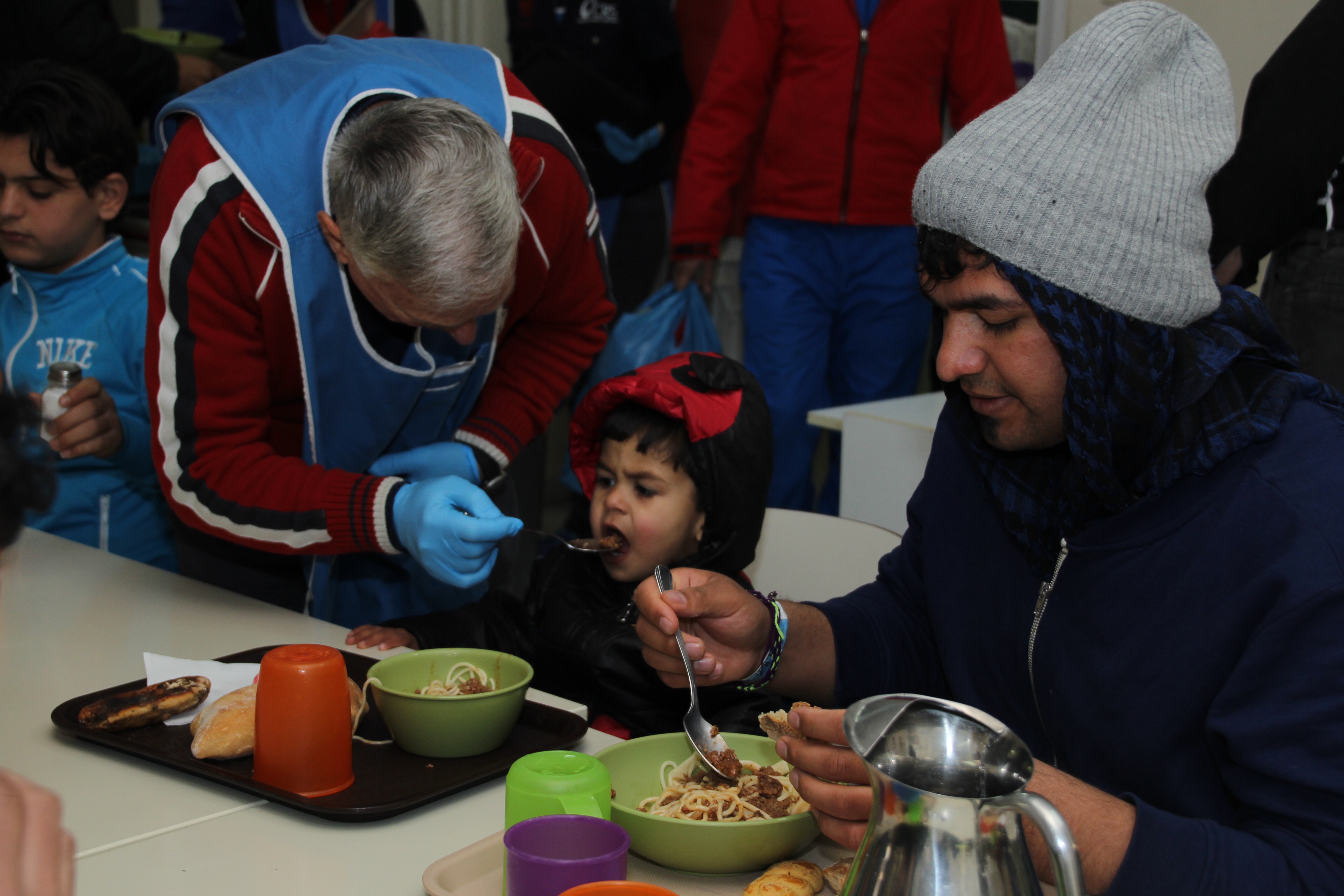
Continue reading “Catholic Relief Services With the Refugees, “Lord When Did I See You…””
Managing the Refugee Crisis – The Economist’s Perspective
 The February 6th-12th issue of The Economist has several excellent and insightful articles about the refugee crisis. Their reports are very worthwhile. I recommend reading them in their entirety. I am providing just a few excerpts here:
REFUGEES are reasonable people in desperate circumstances. Life for many of the 1m-odd asylum-seekers who have fled Syria, Iraq, Afghanistan and other war-torn countries for Europe in the past year has become intolerable. Europe is peaceful, rich and accessible. Most people would rather not abandon their homes and start again among strangers. But when the alternative is the threat of death from barrel-bombs and sabre-wielding fanatics, they make the only rational choice.
Since the start of the refugee crisis, we have argued that Europe should welcome persecuted people and carefully manage their entry into European society. Our views have not changed. Countries have a moral and legal duty to provide sanctuary to those who flee grave danger. That approach is disruptive in the short term, but in the medium term, so long as they are allowed to work, refugees assimilate and more than pay for themselves. By contrast, the chaos of recent months shows what happens when politicians fail to take a pan-European approach to what is clearly a pan-European problem. The plan we outline would require a big chunk of cash and a lot of testy negotiations. But it is in every country’s interest to help—because all of them would be worse off if the EU lapses into a xenophobic free-for-all.
There is an encouraging precedent, too. When more than 1m “boat people” fled Vietnam after the communists took over in 1975, they went initially to refugee camps in Hong Kong and other parts of Asia before being sent to America, Europe, Australia and wherever else would take them. They arrived with nothing but adapted astonishingly fast: the median household income for Vietnamese-Americans, for example, is now above the national average. No one in America now frets that the boat people will not fit in.
 A Deacon's View