Recently a friend of mine said he regularly read my ramblings but wondered if I thought of much else other than the refugees in the Middle East and Europe. I must admit my journey there made an impact but I do indeed have other thoughts. Continue reading “Becoming a Fisher of…Fish!”→
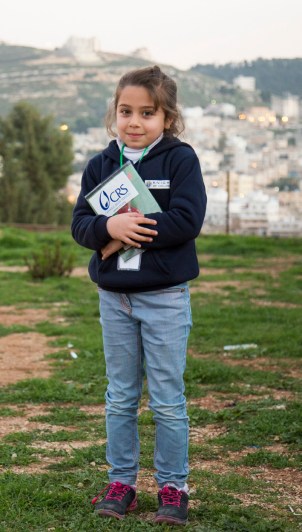
Rama attends the CRS-supported Latin School of Naour in Amman, Jordan, part of the CRS outreach to Syrian refugees. Photo by Oscar Durand/CRS
It is easy to think of people we do not know as being strangers or the “other.” I was struck by something that Abraham Maslow said. He believes that humans have an intense need to belong, to have a sense of community with one another – in Church speak we call it solidarity. Believing that at our core we are all humans in one human family. This explains our common need to be part of families and bonds created in organizations ranging from the workplace to fraternal associations to platoons. Those refugees suffering a half a world away Continue reading “CRS Syrian Refugee Update”→
America Magazine reports that in his May 2nd homily Cardinal Nichols, archbishop of Westminster calls for greater understanding, prayer and advocacy for refugees.The full article is here.
Over the past few months I’ve been blogging about refugees who are fleeing war and persecution. A dear friend of mine saw a PBS news report done by Katie Couric on the refugee families that were rescued by Pope Francis. She passed the information on to me so I could post a video of Couric’s report because, “basically she reiterated everything you have been saying… All they want is to make a living, send their children to school, have peace in Syria and go home. I thought it might be worth you trying to find it just to reinforce this is not just your opinion.”
Couric interviewed two families who were taken to Italy from Lesbos by Pope Francis. In this very short video the families share with Couric their gratitude for their safety, the reasons they fled, and their efforts to integrate into Italian society. It is worth watching.
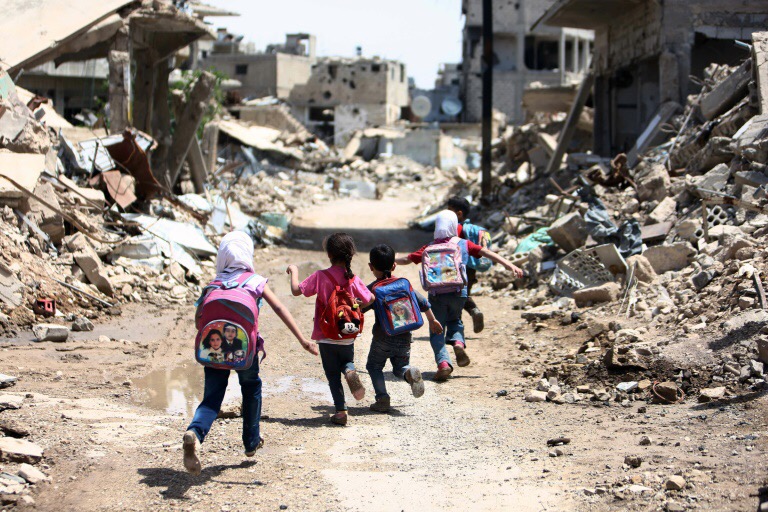
Syrian school children run past heavily damaged buildings in the rebel-held. area of Jobar, on the eastern outskirts of the capital Damascus. (Amer Almohibany, AFP/Getty Images)
To understand why refugee families had fled Syria one only needs to look at this picture. Who would stay in a town, city or country where their children have to run past the rubble of war to go to school – if schools are still even open?
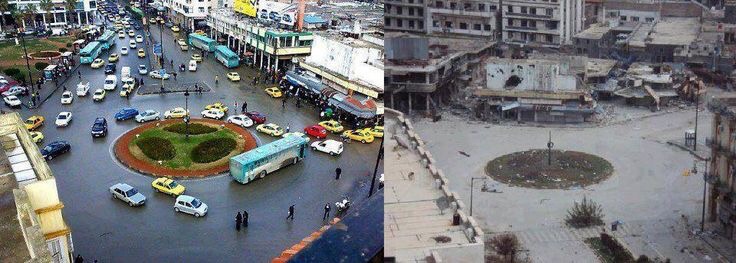
Too many people seem to think that before the civil war that Syria was a backward, impoverished country full of citizens longing to come to the west. This exhibits a remarkable ignorance of the facts. Before the war, Syria was a modern country with an affluent, well educated population. In fact, the literacy rate in Syria at 86.4% (CIA World Fact Book) was slightly higher than the U.S. at 86% (U.S. Department of Education April 2016).
Syria’s cities were modern, and growing until the war began. Now buildings, boulevards and neighborhoods have been reduced to rubble.
Despite the devastation, refugees consistently told our @CatholicRelief delegation that once peace arrives, they will return to Syria and rebuild. Until then, they have every reason to flee, save their children and hope for peace.
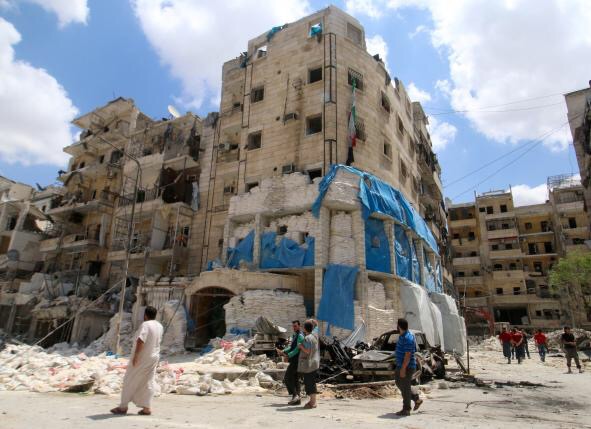
The Doctors Without Borders Hospital hit by an air strike in Aleppo (Abdalrhman Ismail/Reuters)
The killing of innocent civilians in Syria continues. The air strike on an Aleppo hospital run by Doctors Without Borders killed patients, medical workers and visitors. There are no “safe havens” in Syria at all. When hospitals are attacked any semblance of civilization and hope for a normal life has vanished. This devestating attack typifies why Syrians are seeking refuge outside of their country and are justified to do so. Read more about the hospital attack here.
A Turkish gendarme carries the body of a refugee child on January 30, 2016 after the boat he was on sunk in the Aegean Sea. He was one of 40 people on the boat who drowned. (Ozan Kose/Getty Images)
They still flee, many still suffer and some die. Who should be concerned about the largest flow of refugees since World War II? We all should.
In January of this year I traveled with a @CatholicRelief Global Fellows delegation to Greece and Serbia to try to better understand the cause of the refugee crisis in Europe and the response of the Church and other international agencies. So, what did we observe and learn?
An overcrowded dinghy approaches the island of Kos, Greece. (Reuters/Yannis Behrakis)
Closing borders will not prevent people that are living in the midst of war and persecution from attempting the dangerous journey to what they hope will be peace. The EU’s false hope that border closings would discourage reasonable people from seeking a place of safety and peace for their families at almost any cost, once again has been proven wrong. Read about the latest tragedy here.
When our Catholic Relief Services delegation was in Athens we met with Nikos Voutsinos who heads Caritas Athens. Nikos has moved from senior executive positions with multinational corporations to serving the refugees still arriving from Syria, Iraq, Afghanistan and other countries. His brief reflection sums up the attitude of so many Greeks that we encountered.




 A Deacon's View